Rocelix Cream: A Clinically Differentiated Prescription Formulation Featuring Oxymetazoline
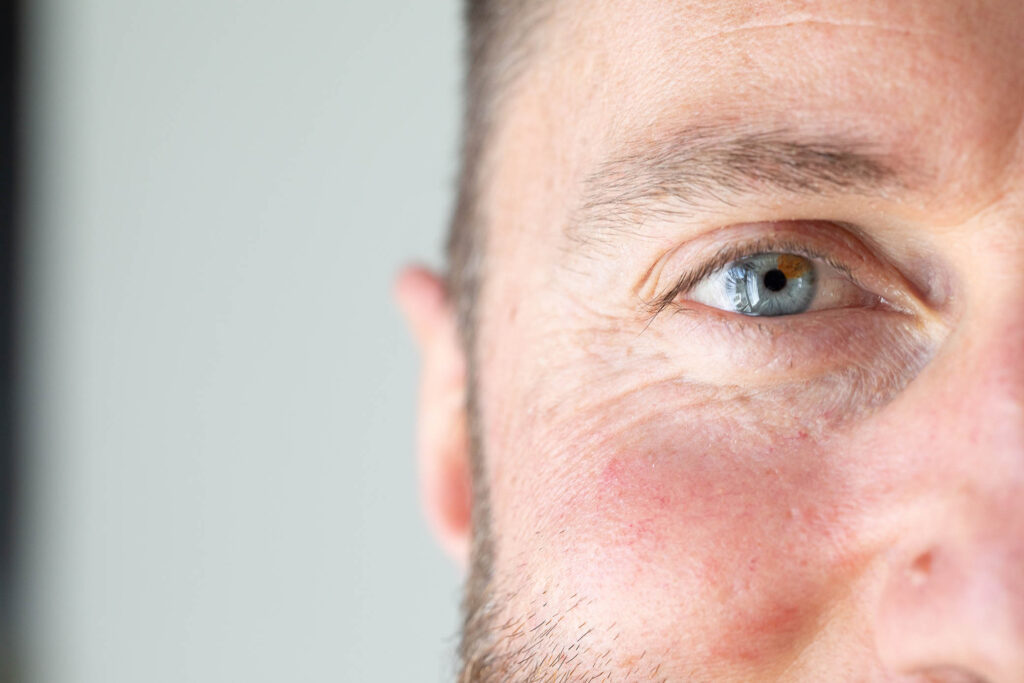
Each year, countless patients go to their dermatologist with concerns of persistent facial redness and visible vascular reactivity—symptoms commonly associated with rosacea and other erythematous skin conditions.
For providers seeking a clinically differentiated option to help target redness and support skin health, SKNV’s Rocelix Cream with Oxymetazoline and Niacinamide represents a purposeful advancement in custom-formulated dermatologic care.
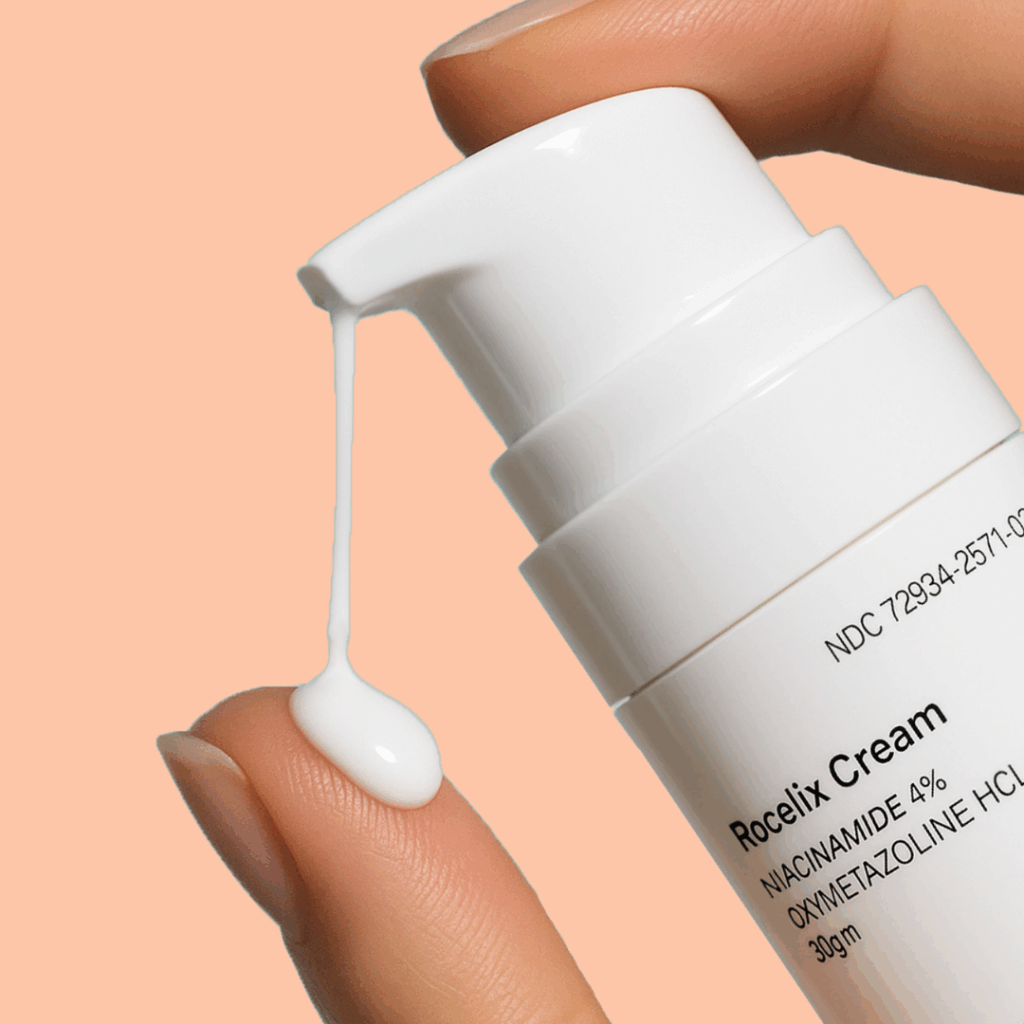
Rocelix Cream is a prescription-only medication formulated with Oxymetazoline HCl 1% and Niacinamide 4%, carefully balanced to target facial redness and the symptoms associated with rosacea. Additionally, this formulation excludes methylparaben, a preservative identified as a potential human allergen or irritant.
By combining well-recognized active pharmaceutical ingredients (APIs) in a single topical formulation and omitting potentially sensitizing excipients, Rocelix Cream provides a clinically differentiated option for prescribers managing patient-specific dermatologic needs.
What Makes Rocelix Cream Clinically Different?
While Oxymetazoline is found in certain branded or generic prescription medications, Rocelix Cream is distinct in that it combines Oxymetazoline and Niacinamide within one customized formulation.
As a results this dual-ingredient approach allows providers to offer patients a targeted medication that works on multiple biological pathways associated with persistent redness, supporting individualized treatment.
For many prescribers, Rocelix Cream’s single-bottle formulation helps streamline application, encourage adherence, and offer a clinically guided alternative when a commercially available formulation may not fully meet a patient’s needs.
What’s Inside: Key Ingredients in Rocelix Cream
Oxymetazoline HCl (1%)
Oxymetazoline is a sympathomimetic alpha-adrenergic receptor agonist that works by constricting small blood vessels within the skin.
Through this mechanism, this localized vasoconstriction helps target the appearance of redness and visible vascular activity often seen in rosacea and other conditions characterized by erythema.
Oxymetazoline has been long respected in dermatology for its targeted mechanism of action, making it a valuable active ingredient for formulations designed to address facial redness under prescriber supervision.
Niacinamide (4%)
Niacinamide, also known as Vitamin B3, is recognized for its anti-inflammatory, barrier-supportive, and skin-conditioning properties. It helps modulate inflammation, support epidermal repair, and enhance tolerance when used in combination with other actives.
Though Niacinamide is not included in any FDA-approved 505(b) topical drugs, its well-documented dermatologic benefits make it a meaningful complement to Oxymetazoline in a prescription-only formulation.
How They Work Together
The pairing of Oxymetazoline and Niacinamide provides a complementary mechanism of action:
- Oxymetazoline helps narrow superficial cutaneous vessels, targeting persistent facial redness.
- Niacinamide helps soothe irritation, strengthen the skin barrier, and reduce inflammatory signaling.
Together, they offer a balanced approach to managing rosacea symptoms, addressing both the vascular and inflammatory components that can be present in people with redness and inflamed skin.
Therefore, by uniting these two active pharmaceutical ingredients in one customized medication, Rocelix Cream enables prescribers to deliver a thoughtful, simplified option tailored to the patient’s specific dermatologic presentation.in.
The Significance of Excluding Methylparaben
Equally important to what is inside Rocelix Cream is what SKNV has purposefully excluded.
Rocelix Cream does not include methylparaben, an inactive ingredient found in some commercially available topical medications.
Methylparaben has been identified as a potential human allergen or irritant, with reported concerns including immune sensitization and potential endocrine effects. Prescribing Rocelix Cream is an option for providers when a patient requires a formulation without parabens or other potentially irritating ingredients.
Note: A prescriber must determine whether this ingredient exclusion makes a clinical difference for an individual patient. SKNV makes no claim that Rocelix Cream is safer or more effective than any FDA-approved drug containing methylparaben.
A Custom-Formulated Medication for Individual Needs
Rocelix Cream represents a clinically differentiated option for prescribers who require flexibility beyond standard formulations.
No FDA-approved 505(b) drug product combines Oxymetazoline 1% and Niacinamide 4% at these concentrations, nor excludes methylparaben as this medication does.
This customized formulation enables providers to tailor therapy for patients who:
- Experience persistent redness or erythema commonly associated with rosacea.
- Require avoidance of specific excipients (e.g., methylparaben).
- Benefit from a single-step, prescription-strength topical that targets redness and supports barrier health.
Important Usage Information
- For topical use only. Apply exactly as instructed by a licensed healthcare provider.
- Consult your prescriber before use if pregnant or nursing.
- Discontinue use and seek medical attention if irritation or adverse reactions occur.
- Follow all prescriber directions regarding amount, frequency, and duration of use.

Why Providers Choose SKNV
SKNV is an FDA-Registered 503B Outsourcing Facility dedicated to producing clinically differentiated medications that empower dermatology practices to provide individualized, evidence-guided care.
Through SKNV, prescribers gain access to custom formulations manufactured under strict quality standards, enabling provider-controlled prescribing and dispensing for unique dermatologic needs.
SKNV’s mission is to support dermatology professionals with high-quality, compliant medications that align with the principles of safety, precision, and clinical necessity.
The Bottom Line
Rocelix Cream underscores SKNV’s commitment to clinically guided innovation in dermatology.
By combining Oxymetazoline HCl 1% and Niacinamide 4% in a single, methylparaben-free formulation, Rocelix Cream offers prescribers a new avenue to target redness and the symptoms associated with rosacea through a custom, prescription-only approach.
This thoughtful integration of actives allows providers to address patient-specific needs efficiently and responsibly within the context of professional dermatologic care.
Next Steps for Providers
If you’re a dermatology provider interested in offering Rocelix Cream to your patients, contact the SKNV Provider Support Team to learn more about prescribing and dispensing.
SKNV provides dedicated educational and operational support to help practices implement provider-controlled medications designed for individualized patient care.
Next Steps for Patients
If you experience persistent facial redness or symptoms associated with rosacea, speak with your licensed healthcare provider about whether Rocelix Cream may be an appropriate prescription option for you.
Rocelix Cream is available by prescription only and must be prescribed and dispensed through a licensed healthcare professional.

Important Disclaimers
Rocelix Cream is a prescription-only medication manufactured by SKNV LLC, an FDA-Registered 503B Outsourcing Facility.
The FDA does not review or approve medications made by outsourcing facilities for safety, efficacy, quality, or indications for use.
A prescriber must determine, for each individual patient, whether Rocelix Cream produces a clinical difference compared to a commercially available product.
Rocelix Cream and its active pharmaceutical ingredients have not been reviewed or approved by the FDA for safety, efficacy, quality, or indications for use.
Rocelix Cream is exempted from the clinical trials required for approved drugs.
References
- Hoover RM, Erramouspe J. Role of Topical Oxymetazoline for Management of Erythematotelangiectatic Rosacea. Ann Pharmacother. 2018;52(3):263-267. PMID: 29094614.
- Namazi MR. Nicotinamide in Dermatology: A Capsule Summary. Int J Dermatol. 2007;46(12):1229-1231. PMID: 18173513.
- Bajaj AK, Chatterjee AK. Paraben Contact Hypersensitivity. Indian J Dermatol Venereol Leprol. 1985;51(6):319-321. PMID: 28164903.
- Cashman AL, Warshaw EM. Parabens: A Review of Epidemiology, Structure, Allergenicity, and Hormonal Properties. 2005;16(2):57-66. PMID: 16036114.
- Schnuch A, Lessmann H, Geier J, Uter W. Contact Allergy to Preservatives. Br J Dermatol. 2011;164(6):1316-1325. PMID: 21332463.