
By Ava Malkin
At SKNV, we are dedicated to targeting 17 skin conditions, which begins with comprehending their causes and obtaining a proper diagnosis. Being the first pharmacy for sensitive skin, we follow and address the needs of the ever-evolving realm of dermatology, and we understand the importance of getting an accurate description and characterization of one’s skin concern, especially in order to access and potentially benefit from our 120+ customized prescription topical medications.
Hence, we intend to explore the value of diagnosis in dermatology, specifically defining diagnosis and exploring some procedures, while also employing expert insights from Dr. Dina Strachan, a widely respected dermatologist and SKNV provider.
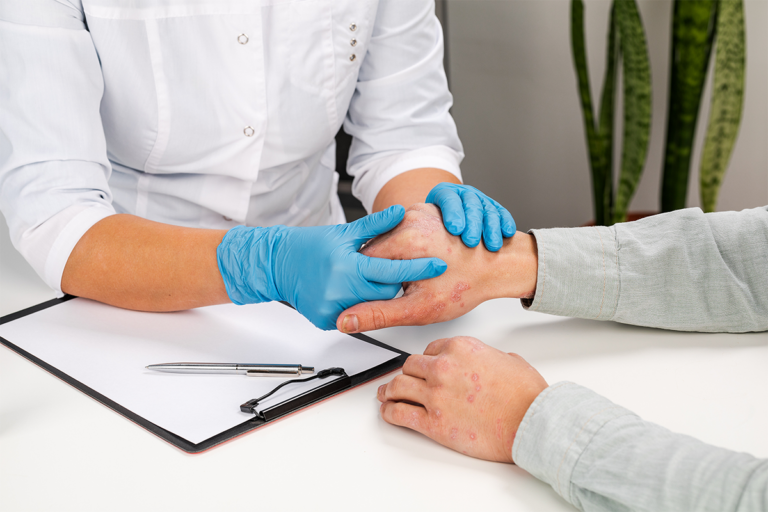
In dermatology, diagnosis describes the procedure of determining a skin condition or disorder based on its symptoms, signs, or testing results, differentiating it from other potential skin diseases [1].
It is the responsibility of board-certified dermatologists to be able to diagnose a skin disease in order to provide accurate treatment (i.e., medications or skincare routines).
Diagnoses are essential because they uncover not only the root causes of the skin condition but also reveal an ideal plan of treatment to address skin concerns, alleviating the process for both providers and patients.
Dr. Strachan, who specializes in hair loss treatment, told us on our SKNV DermTalk Podcast, “People don’t diagnose it [alopecia, as a skin condition]. And that’s been one of my pet peeves. If you’ve got hair loss, you need to get a diagnosis.” She continued, “Hair loss isn’t just one thing. I mean, people use the word. They come in and say, ‘Oh, I’ve been seeing a doctor for alopecia.’ I say, ‘Well, that means hair loss. What’s your diagnosis?’ And they say, ‘Alopecia.’ But, alopecia is just the medical term for hair loss. There are many types of hair loss, just like there are many types of infections.”
As Dr. Strachan explains, it is essential to obtain a diagnosis for skin diseases like alopecia, as skin concerns may have many types, causes, and treatment methods. Failing to categorize a disease or placing a generic, overarching label on a dermatological concern could frustrate dermatologists, eliciting Dr. Strachan’s “pet peeve,” and confuse patients, blurring the true origins of conditions such as alopecia.
“Hair loss could be genetic. It could be something that’s related to your diet, like a nutritional deficiency. It could be syphilis… It could be your thyroid disease, lupus, sometimes it’s a medication. It could be protein deficiency. It can happen after you’ve had surgery or after a pregnancy. So, you actually want to know why you have hair loss,” she stated. “And then, in terms of some of the scarring hair losses, you know, if you don’t diagnose it and start treating it, you can get permanent, irreversible scarring. So, it’s not just one thing, and it’s not just like everybody uses the same thing for hair loss. You want to know why you have hair loss.”
Therefore, by being aware of the official term for a skin condition, one may understand its roots and how it develops, whether that involves another comorbid skin condition, an underlying health concern, a medical overlap, a nutritional deficit, the list continues. This comprehension of skin disease development then works to help patients accurately treat their concerns. In other words, diagnosing can then also assuage the treatment process.
Dr. Strachan acknowledged this connection between diagnosis and proper treatment, explaining how knowing one has alopecia and recognizing its prevalence can encourage one to seek medical advice.
“I would say that people now know that there is something that can be done [for hair loss], and so they come in [to dermatologist offices] with that awareness that there are many things that you can do for hair loss,” she said. “Now they’re aware that there are just many options… And I think when more people speak about it, then more people take notice.”
This notion implies that a patient’s knowledge of their skin disease might prompt them to pursue solutions, including topical medications. The relation between diagnosing and addressing skin diseases becomes particularly salient when determining the strength/potency and vehicle of a medication.
Dr. Strachan explored this interplay by explaining how diagnoses dictate the aggressiveness of a treatment plan. She stated, “Some people have problems that are short term, that you can just give them a prescription for something to use for a couple months, and actually, it’s gone. It’s not a chronic problem. Other people, you know, they may have a chronic problem, but still, they may get a lot of benefit just from the topical.” By fully understanding one’s skin disease, they can begin to receive personalized provider-controlled care, something that SKNV specializes in.
That is, once a provider officially diagnoses a skin condition, it becomes much easier and more convenient to provide targeted medical solutions, especially in topical form like SKNV’s formulations. This personalized approach is a notable benefit of the dermatological industry generally.
“One of the advantages we have in dermatology is that we have direct access to the organ we want to treat. [We] see it every day. It’s there. We can put something on it…it’s nice to be very targeted and be able to just apply a topical… and not have to be as concerned about it having effects on other parts of your body [like oral medications],” Dr. Strachan reasoned.

Depending on the skin problems and their manifestations, dermatologists follow various procedures to determine a patient’s exact skin condition. Considering that board-certified dermatologists receive an education that provides them with the skill set to determine over 3,000 diseases of the skin, hair, and nails, there are a wealth of notable symptoms and procedures for all skin conditions.
While the wealth of conditions and information regarding dermatological states can be overwhelming, as Dr. Strachan explained, dermatological diagnoses allow for easier treatment via direct access to the skin. To delve into some specific diagnosis processes, we will explore the procedures involved in a portion of the common skin conditions that SKNV’s customized topical medications work to address.
Often, dermatologists can determine if a patient has acne by visually examining their pimples, inflammation, and breakouts. [2] To gauge the type of acne (and therefore the ideal treatment plan), providers tend to examine the location and severity of the breakout.
Diagnoses are not always exact. Acne can sometimes appear similarly to “acne inversa”/hidradenitis suppurativa, peroiral dermatitis, or folliculitis, all of which involve different treatment paths.
Upon an accurate diagnosis, to target acne concerns, providers can explore SKNV’s menu of customized topical medications, which incorporate with active ingredients like niacinamide, tretinoin, clindamycin, sodium sulfacetamide, spironolactone, tazarotene, benzoyl peroxide, adapalene, and dapsone into various creams, gels, and liquids.
Dermatologists usually determine AK by looking at a patient’s skin, checking for the characteristic scaly skin patches associated with the condition, while also asking about symptoms and other medical problems. The provider might also question about UV and sun exposure, skin cancer risks/family history, and environmental factors. [3]
Once a patient receives an AK diagnosis, they can explore topical treatments like SKNV’s gels, which contain active ingredients like diclofenac sodium, imiquimod, levocetirizine dihydrochloride, salicylic acid, tretinoin, and niacinamide.
As Dr. Strachan emphasized, it is essential to determine if a patient has alopecia, which a medical professional often does by examining the regions of hair loss and inspecting nails. They might also question patients about their health and family history.
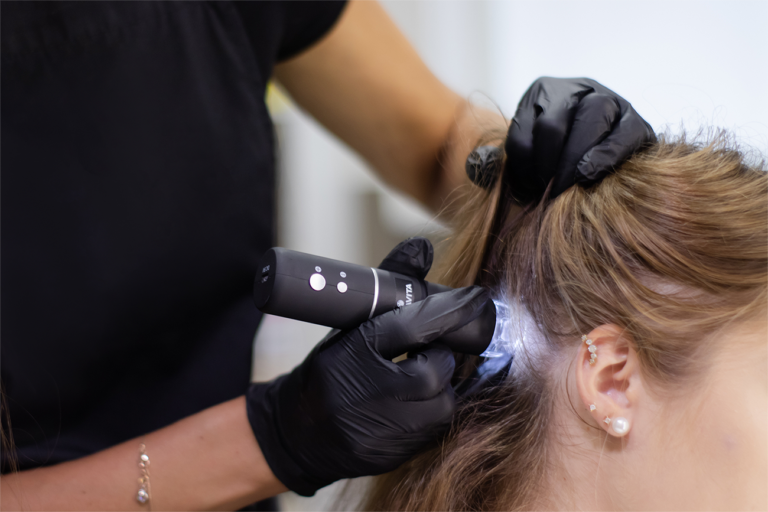
In certain cases, dermatologists employ a dermatoscope to magnify areas of hair loss, or they might perform a biopsy in the area of hair loss to be examined further. Some providers also require blood tests to assess if the hair loss is a byproduct of thyroid disease. [4]
After receiving an alopecia areata diagnosis, patients can speak with their provider about SKNV’s solutions, which incorporate active ingredients such as minoxidil, betamethasone dipropionate, pentoxifylline, finasteride, progesterone, fluocinolone acetonide, tacrolimus, and niacinamide.
Eczema, a specific type of dermatitis often referred to as atopic dermatitis, is normally determined by an in-depth analysis of the area of skin concern, paired with questions regarding symptoms, family history, and location of irritation, dryness, and rashiness on the skin.
For some patients, a dermatologist could conduct a skin biopsy to determine the best treatments. for the eczema location and severity. [5]
After discovering that a patient has eczema, they can explore SKNV’s personalized topical offerings, including active ingredients like tacrolimus and niacinamide in cream and ointment form.
Melasma diagnoses often begin with a dermatologist examining a patient’s face and neck. They might follow with a Wood’s lamp or dermatoscope to determine how deep darker pigments reach into the skin, which may assist in determining treatment options. If a dermatologist thinks it is possible that these dark spots are a different skin condition, they might conduct a biopsy to confirm their diagnosis. [6]
Topical medication options can work to address melasma concerns upon receiving a diagnosis; SKNV’s emulsions, which contain hydroquinone, tretinoin, hydrocortisone, triamcinolone acetonide, and lactic acid, work to target melasma and create a clinical difference for each patient, as determined by the prescriber.
A psoriasis diagnosis often involves a dermatologist examining a patient’s skin, scalp, and nails for patches of itchy skin or thick, yellow nails; they will also likely question joint swelling/pain, family history of psoriasis, and any other external factors that may contribute to these symptoms. It is also common for a provider to conduct a skin biopsy in which they remove a small piece of skin to analyze under a microscope. [7]
Patients with diagnosed psoriasis can look to topical medications to alleviate their symptoms and struggles. SKNV’s solution and cream provide a customized option, incorporating active ingredients like calcipotriene, clobetasol propionate, and niacinamide to address the patient’s needs, as determined by the provider.
To determine if a patient has rosacea, a dermatologist will look at their skin and eyes, while also asking questions about symptoms commonly associated with the skin disease. Further testing, including biopsies, might be required to differentiate the concerns from other conditions, such as lupus, or to determine the severity of the condition (e.g., granulomatous rosacea is a more severe type that requires a biopsy). [8]
After being diagnosed with rosacea, a patient can explore topical medication options to alleviate their symptoms. SKNV’s gels and creams, which contain active ingredients such as brimonidine, ivermectin, azelaic acid, metronidazole, and niacinamide, are dedicated to targeting these rosacea concerns.
A skin examination and questioning surrounding medical history can initiate a vitiligo diagnosis. Usually, dermatologists use a Wood’s lamp to highlight areas of vitiligo on the skin For some patients, providers will conduct blood tests due to the fact that vitiligo is an autoimmune disease that is therefore also reflected in your immune system and can cause other health conditions, such as thyroid disease. [9]
Upon their diagnosis, if a patient wishes to seek treatment for their vitiligo they might turn to topical medications. SKNV offers a cream with 0.1% tacrolimus to begin addressing these pigmentation concerns.
With technological advancements like artificial intelligence, the realm of dermatology is forced to adapt and align with these innovations. Notably, AI technology is increasingly able to determine skin malignancy, eczema/atopic dermatitis, psoriasis, and more. [10]
Dr. Strachan even noted this development, stating, “I know that there are AI systems that are used to analyze photographs, to see, to detect changes in hair growth that can’t be detected by the human eye, that it’s being used in robotics to treat hair loss.”
However, it is essential to remember that these technologies are not without flaws, and, especially in these early stages, a dermatologist’s diagnosis still holds value.
“I believe technology should be our servant, not our master. And I think it needs to be regulated, and it needs to be vetted. It needs to be held to the same standards that a person who goes into medicine is held to,” Dr. Strachan explained.
Similarly, while SKNV can appreciate these advancements in technology, we also highly value the tailored care process of a dermatologist in providing patients with customized offerings like SKNV’s topicals. We value our relationships with providers and emphasize the necessity of strong, productive correspondence between our prescribers and their patients; we want patients to also recognize the importance of personalization in dermatology under the guidance of their providers. SKNV’s practices encompass this dynamic, offering customized care for patients at the advice of their expert providers.