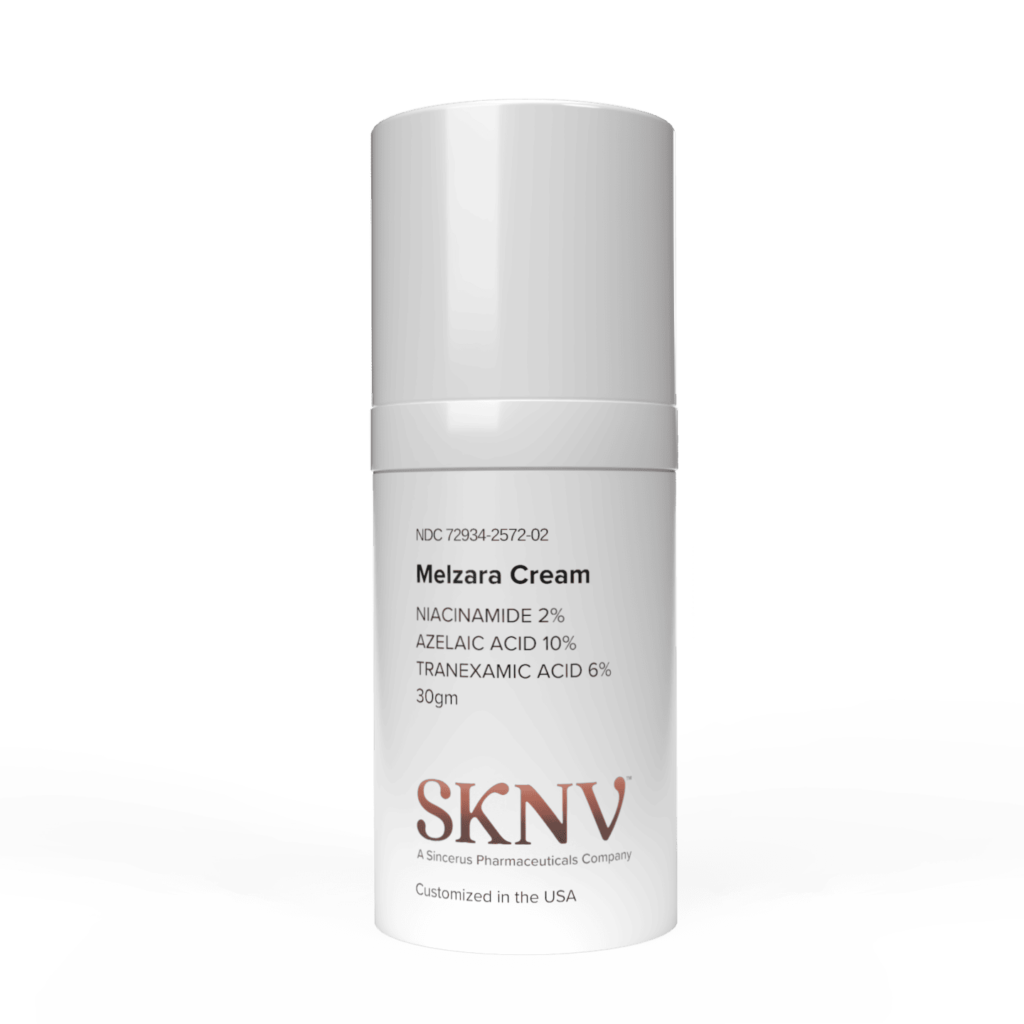
Melzara Cream is a specialized medication designed to address melasma and persistent pigmentation with a synergistic blend of tranexamic acid, azelaic acid, and niacinamide, helping to calm inflammation and support balanced skin tone. Visit our Melzara information page for more details on how Melzara can be the right approach for melasma.
Quality Without Compromise
Medications without potential allergens or irritants for certain patients, as determined by your provider*
How to Send a
Melzara Cream
Prescription Through Your EMR
1. Select ‘SKNV Pharmacy’ in the prescribing section of your EMR.
2. Enter '
Melzara Cream
' in your EMR.
3. Enter the SKNV medication name found in column 1.
All medications are already loaded in your EMR.
You can locate SKNV in your EMR by one of the following:
Name – SKNV Pharmacy
NCPDP: 5754634
NABP: 1726341
City: Deerfield Beach
ZIP code: 33442
4. Make sure the patient’s cell phone is the primary contact in your
EMR, then submit the prescription.
Let your patient know they will receive a text message to pay for the prescription.
Once payment is made and the RX is dispensed, the patient will receive a text message with the tracking information.
Discover the full range of SKNV medications available for your patients. Explore our complete catalog to find the right solution for your practice and patient needs.
These medications are made by SKNV, an FDA-registered 503B outsourcing facility that specializes in customized medications to meet unique patient needs. The prescribing doctor will determine if the medication makes a clinical difference for the individual patient. The FDA does not review medications made in an outsourcing facility for any particular indication, safety or efficacy. SKNV makes no claims its customized medications are safer or more efficacious than a commercially available drug. Any references to “common usages” should not be interpreted as recommendations or claims regarding the clinical indication of any medication.